A Warsaw Modeller in Lviv: Dr. Grzegorz Bogdan Brings His THz Simulations to the Test

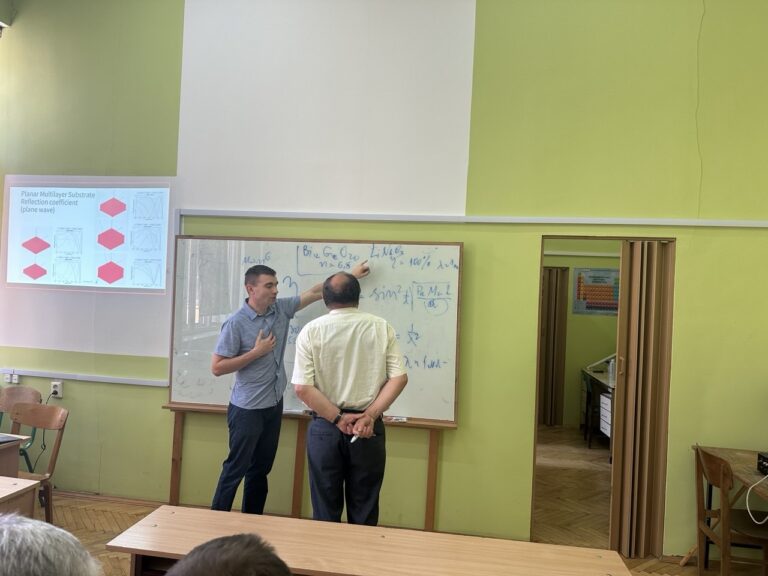
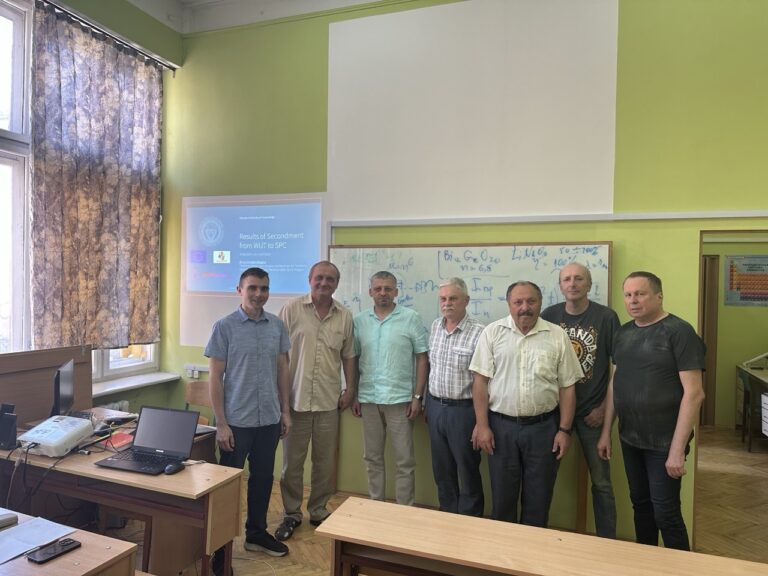
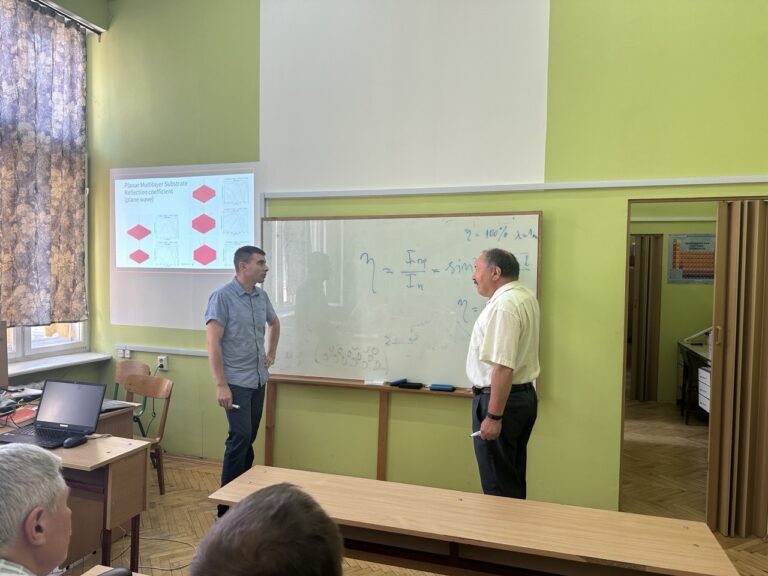
Some research questions can only be answered when a model leaves the screen and meets the people who might one day prove it wrong. This summer, Dr. Grzegorz Bogdan from Warsaw University of Technology (WUT) brought exactly that challenge to Lviv. As part of the TeraHertz secondment programme, he spent a month at PE SoftPartners (SPC), from 14 June to 13 July 2025, before stepping in front of a whiteboard full of colleagues from Lviv Polytechnic National University to share what he had been working on.
Who He Is and What He Brought to Lviv
Dr. Bogdan is a researcher at Warsaw University of Technology, one of the TeraHertz consortium’s key partners and a centre of expertise in electromagnetic modelling and antenna engineering. He arrived in Lviv not only to continue his own work but to embed himself in the day-to-day research life of SoftPartners, exchanging methods, assumptions, and ideas with a team that approaches the same problems from a different angle. That kind of close, in-person collaboration is the whole point of a Marie Skłodowska-Curie Staff Exchange: expertise travels best when the researcher does.
The Work Behind the Whiteboard
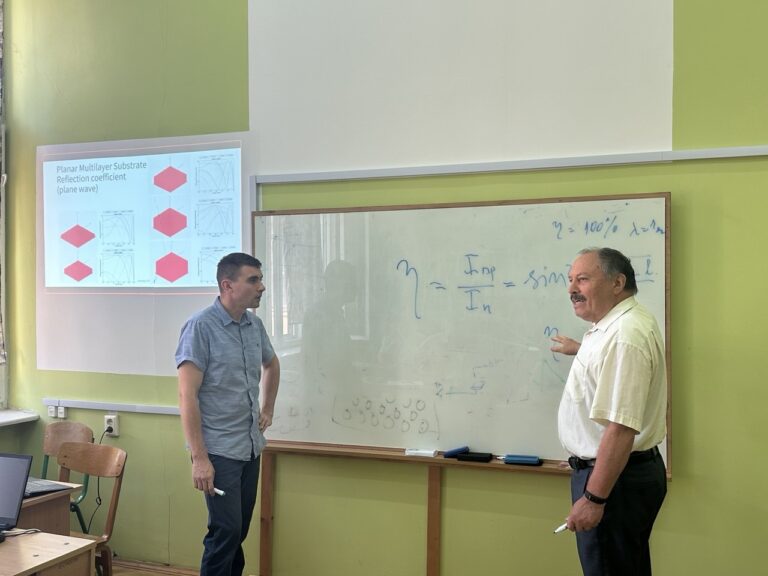
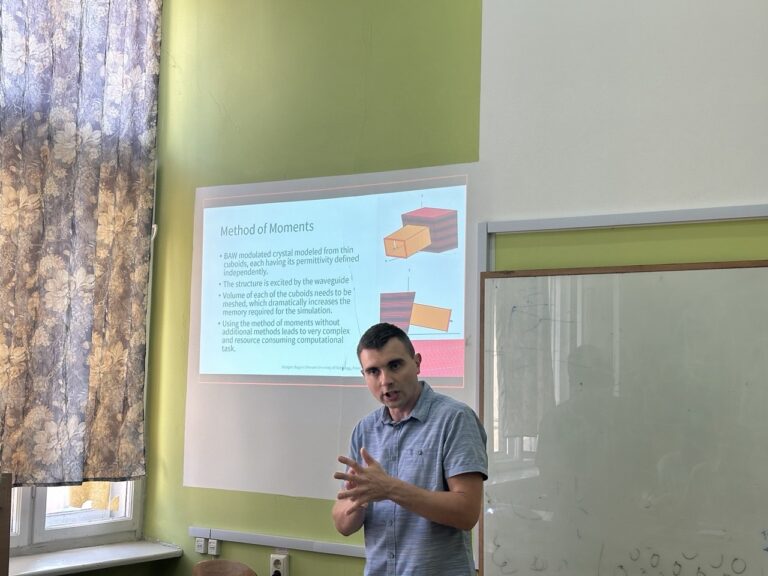
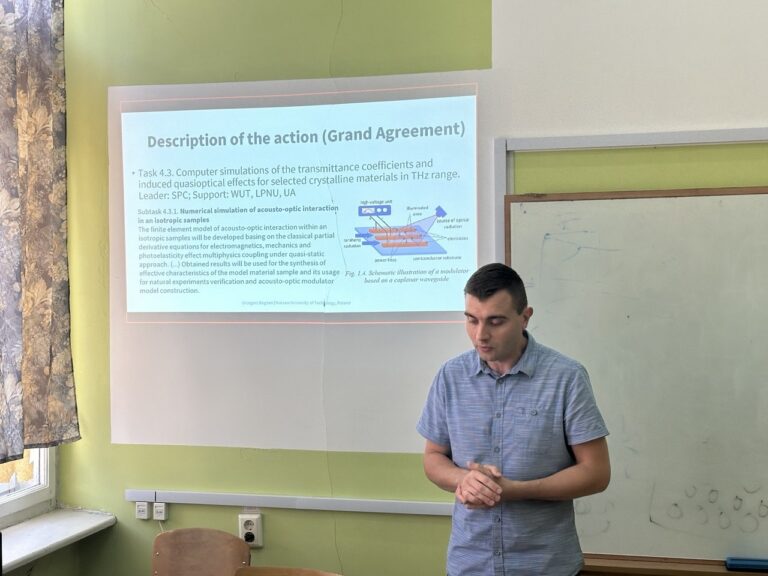
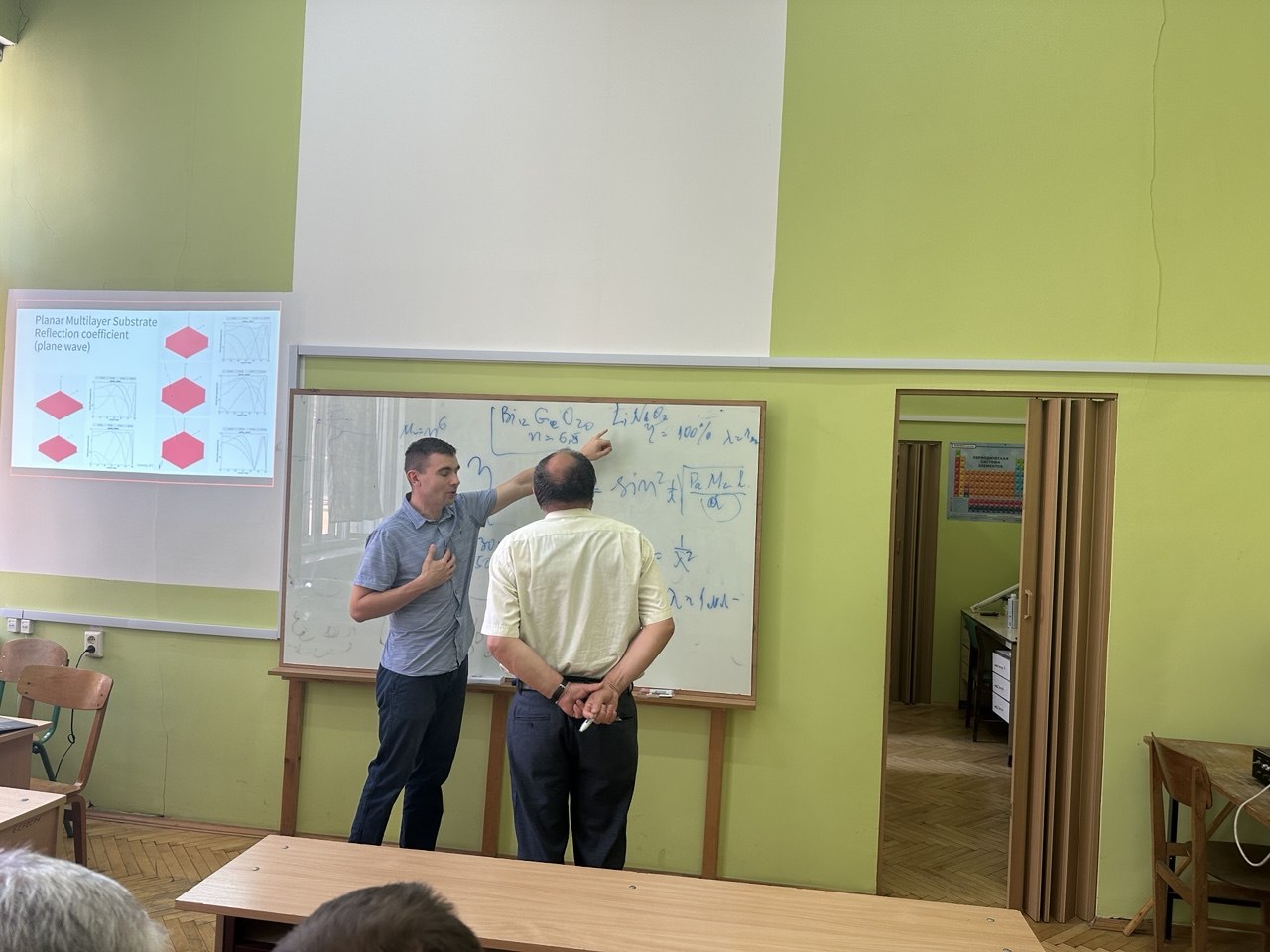
During his stay at SoftPartners, Dr. Bogdan focused on the modelling and numerical simulation of how materials behave in the THz range. His work covered the modelling of the elasto-optic effect in crystals built from stacked layers of periodically changing refractive index, computer simulations of the transmittance and reflectance coefficients for selected crystalline materials, and a critical assessment of the resulting data. On the board in Lviv, this took concrete shape, reflection-coefficient analysis for planar multilayer substrates and the modelled behaviour of materials such as Bi₁₂GeO₂₀ and LiNbO₃, the kind of detail that turns a presentation into a working session.
Where Theory Meets Experiment
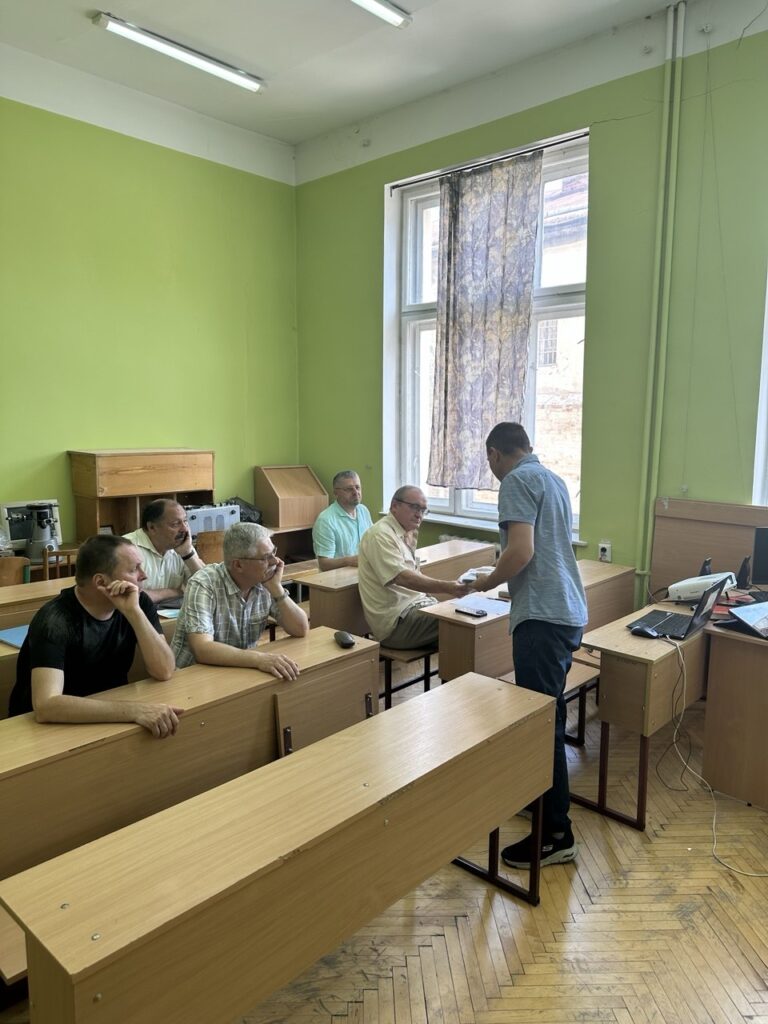
The most valuable part of the visit wasn’t the slides; it was everything that followed. The central thread of the discussion was verification: how can these simulation models be confirmed in real experiments? Dr. Bogdan’s results gave the Lviv Polytechnic team a concrete starting point, and the exchange that followed mapped out how theoretical predictions might be tested against measurements in partner laboratories. This dialogue between modelling and experiment is precisely what the TeraHertz network is designed to generate, predictions that are challenged, refined, and ultimately grounded in real data.
A Reminder of Why Mobility Matters
Dr. Bogdan’s month in Lviv connected the simulation expertise of WUT and SoftPartners with the experimental ambitions of the wider TeraHertz team, and left behind a clear set of questions worth chasing. The project thanks him for sharing his work, and looks forward to the day his models face the experiments that will put them to the test.