The TeraHertz Project at IMNE-2025: Three Days That Brought Europe’s Materials Community to Krakow

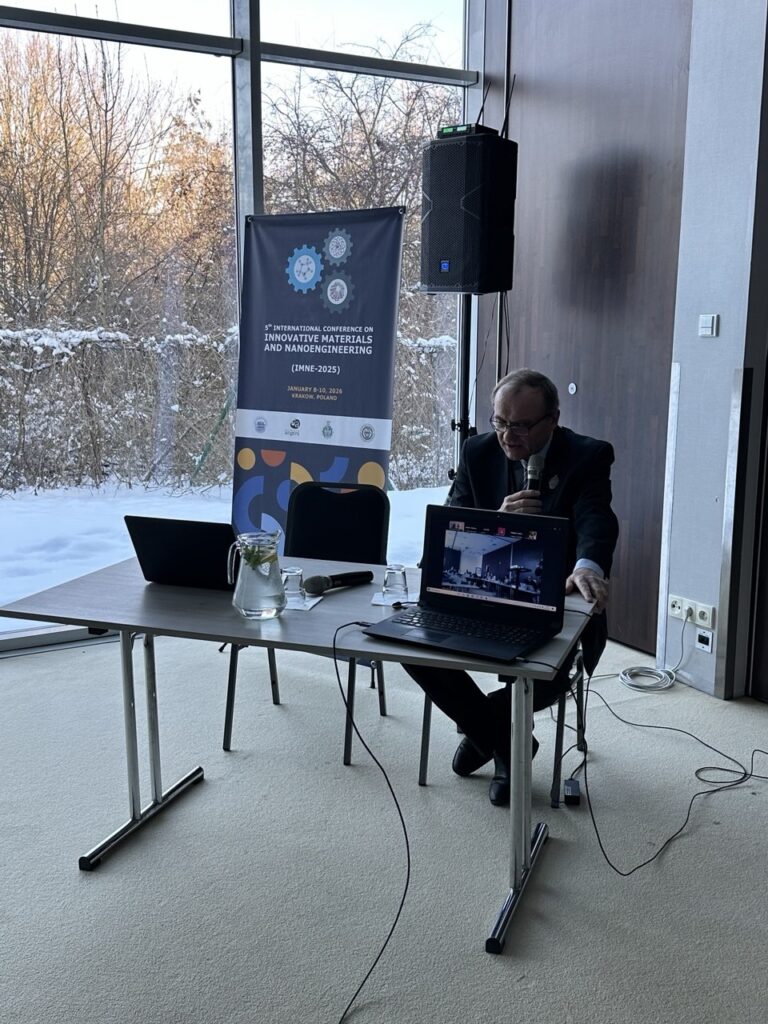
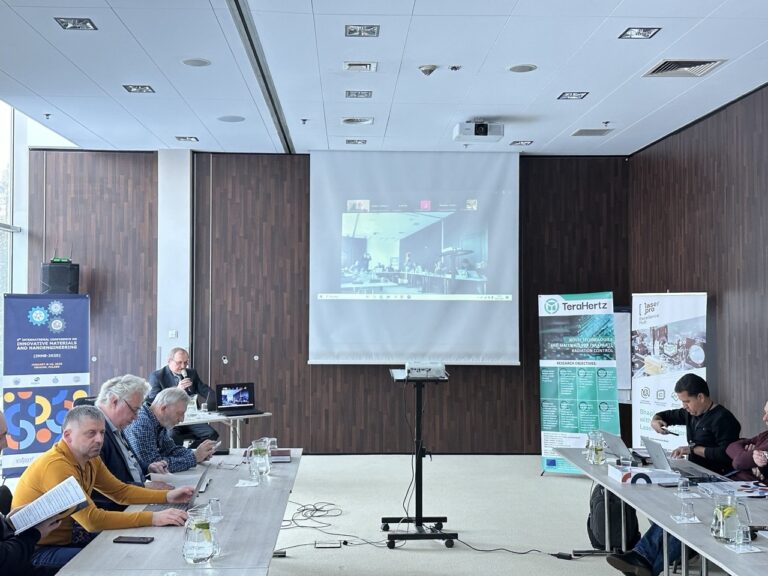
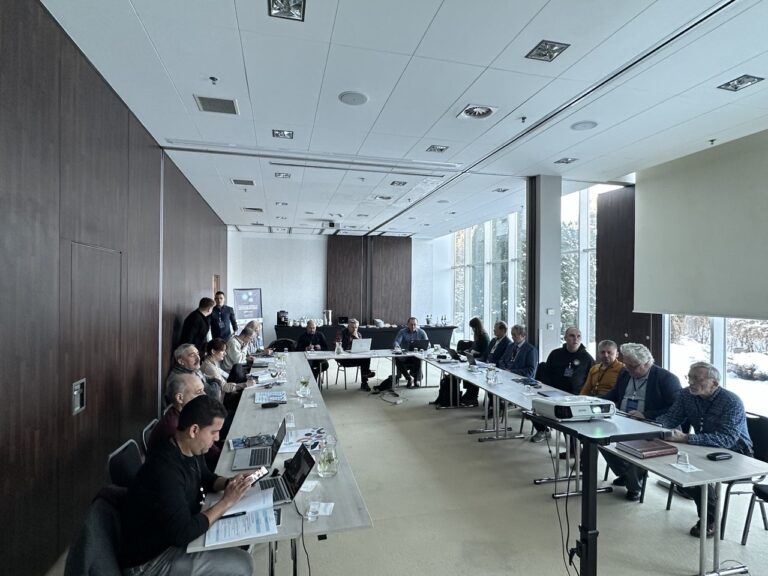
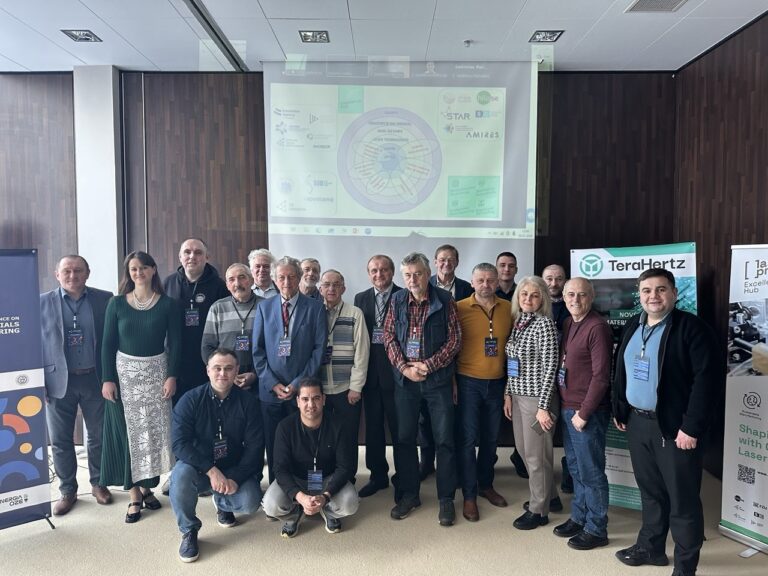
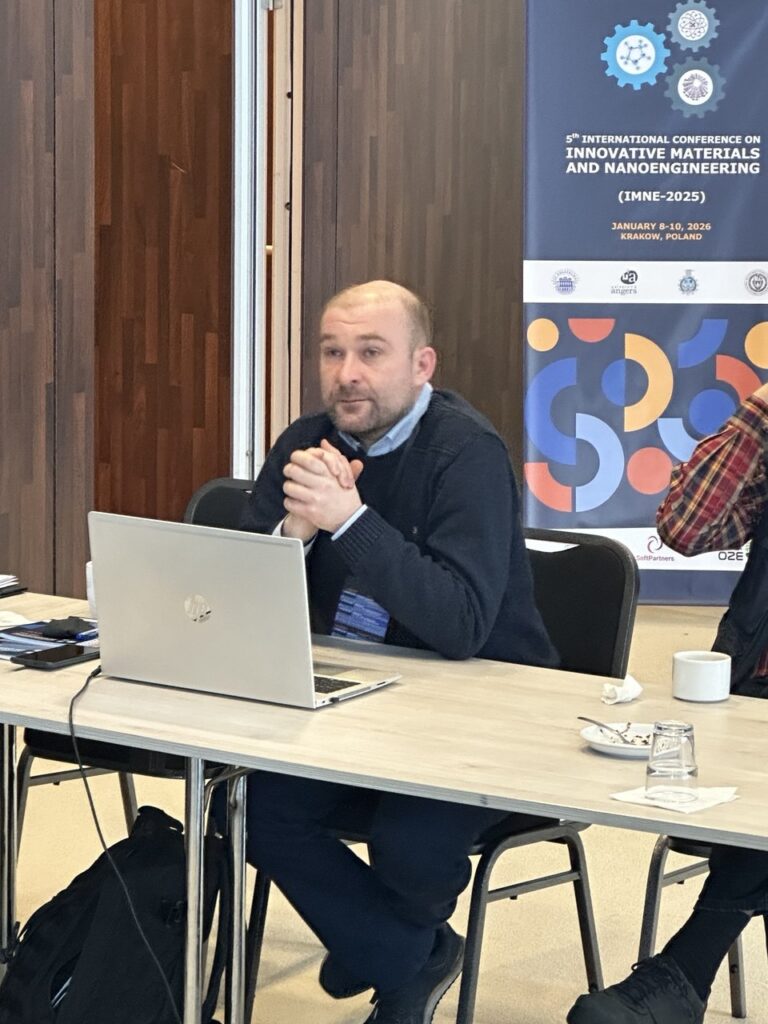
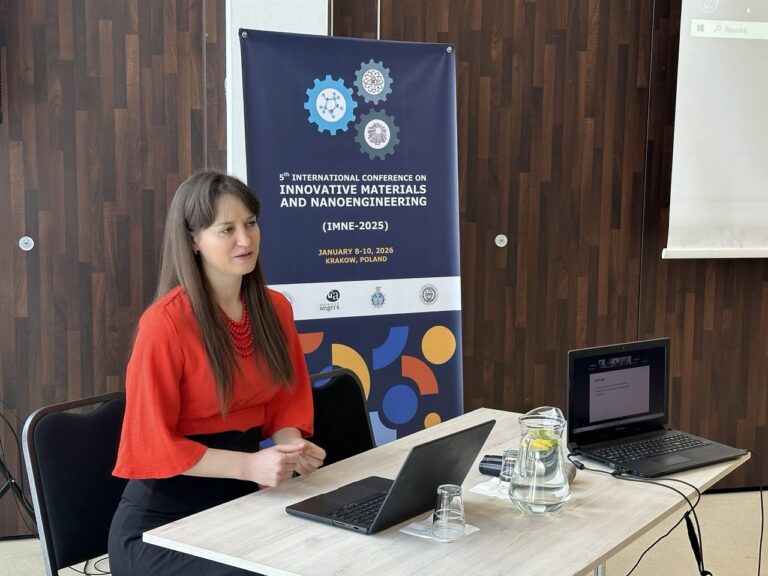
For three days in early January, a conference hall at the Premier Krakow Hotel turned into a crossroads of European materials science. From 8 to 10 January 2026, the 5th International Conference on Innovative Materials and NanoEngineering (IMNE-2025) gathered researchers, young scientists, and industry representatives from Ukraine, Poland, Germany, France, Lithuania, the USA, and beyond. Held in a hybrid format and organised under the umbrella of the Horizon Europe MSCA project TeraHertz (Grant Agreement No. 101086493), the event proved once again that scientific collaboration grows stronger the more borders it crosses.
The conference was organised jointly by the Center of Laser Technologies and NanoEngineering at Lviv Polytechnic National University, the University of Angers, Warsaw University of Technology, PE SoftPartners, and Energia Oze Ltd., under the auspices of the Ministry of Education and Science of Ukraine and Lviv Polytechnic National University.
A Programme That Spanned the Whole Field
Across a plenary session and four thematic sections, Innovative Materials, Optical and Quasioptical Techniques for Materials Characterization, Nanoengineering Technologies and Processes, and Applications of Innovative Materials, the conference covered the entire arc from fundamental physics to real-world devices.
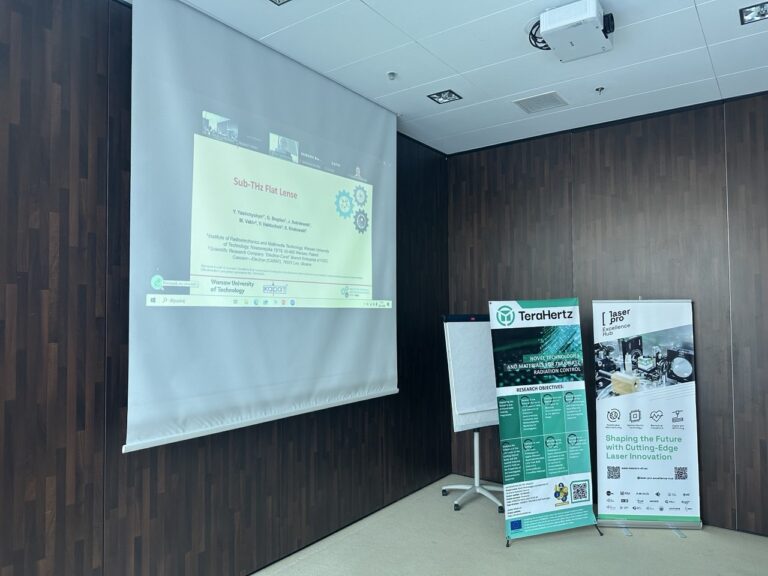
The plenary set an ambitious tone. Prof. Andriy Kityk and colleagues opened with a study of bent-core nematics self-assembling in nanopores; Prof. Yevhen Yashchyshyn and the WUT team presented a sub-THz flat lens; and Dr. Gediminas Račiukaitis offered a wide-angle view of Lithuania’s remarkable laser ecosystem. A highlight was the invited lecture by Prof. Yury Gogotsi (Drexel University, USA) on the progress, challenges, and opportunities in the field of MXenes, a reminder of how far two-dimensional materials have travelled in just over a decade.
Other talks ranged across sub-terahertz second harmonic generation in lithium niobate, lattice-dynamics simulations of bismuth germanate and silicate crystals, all-optical THz modulators, terahertz communications for 6G, nonlinear optics of hybrid and organometallic materials, and ultra-wide-bandgap semiconductors, a programme as broad as the community behind it.
A Word from the Organisers
For the conference chairperson and TeraHertz coordinator, Prof. Anatoliy Andrushchak, the gathering was about more than science:
“Every edition of IMNE reminds me why we do this work. Bringing together colleagues from seven countries, many of them facing real hardship at home, to share results, argue over data, and plan what comes next is the very heart of European research. The science presented here was excellent, but the connections made in the coffee breaks may matter just as much.”
Dr. Nazariy Andrushchak, Conference Secretary and Publication Chair, focused on the next generation and on the lasting record of the meeting:
“Our goal was never just to fill three days with talks. We wanted to give early-career researchers a real platform and to make sure their work lives on in print. Selected contributions will be published, free of charge, in the Ukrainian Journal of Physical Optics, so the ideas discussed in Krakow will reach a far wider audience than the room could hold.”
Reflecting on the scientific substance, Scientific Chair Prof. Andriy Kityk pointed to the breadth of the programme:
“What struck me this year was the coherence across the sections. A material synthesised in one lab was being characterised in another and modelled in a third. That is exactly the kind of joined-up science a strong network should produce, and IMNE-2025 showed it in action.”
A Shared Table with the LASER-PRO Project
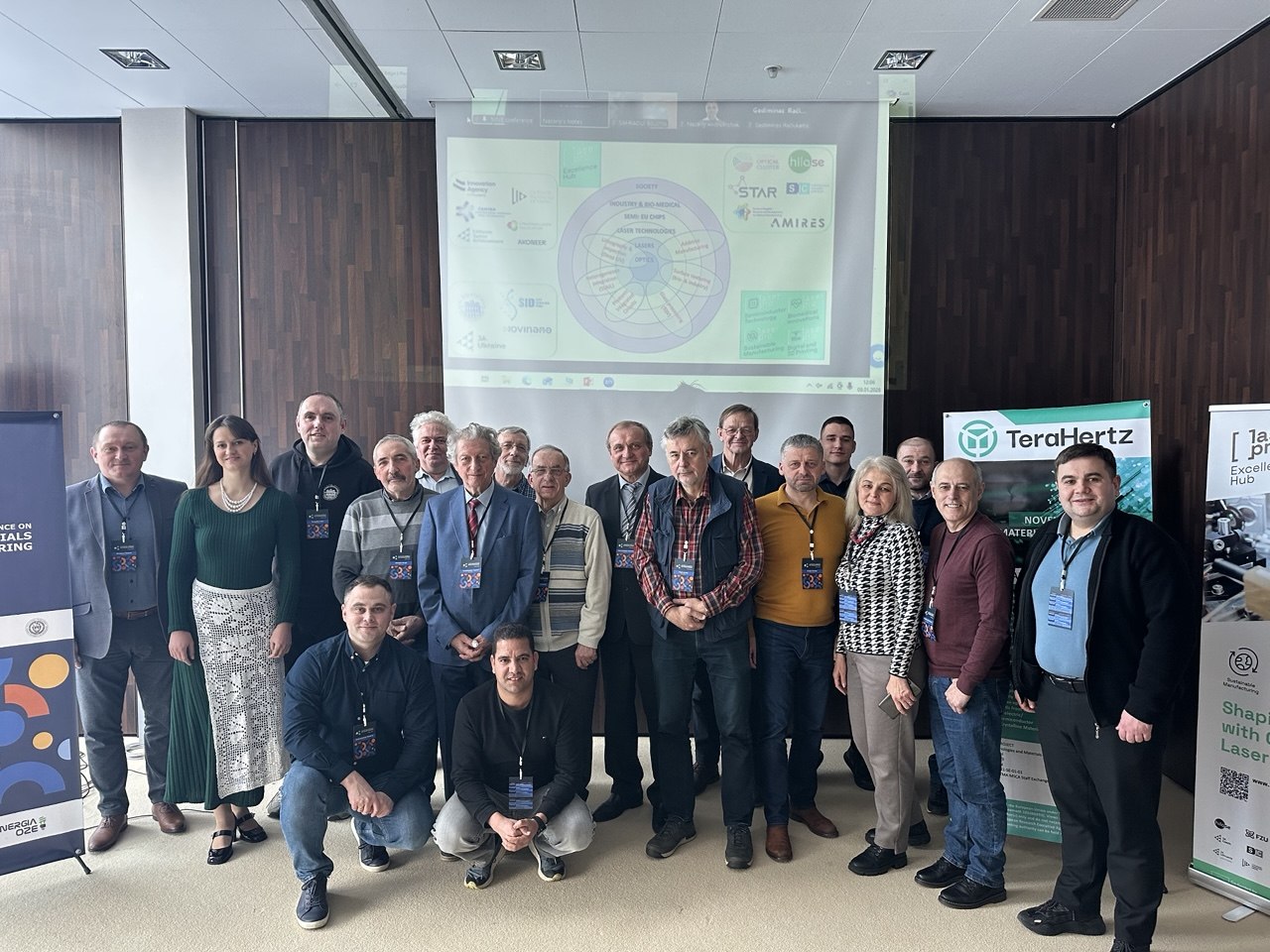
One of the most encouraging features of IMNE-2025 was that the room reached beyond a single project. Among the participants were colleagues connected to LASER-PRO (Advanced Laser Technologies for the Sustainable Prosperity of Europe), a Horizon Europe Excellence Hubs initiative (Project No. 101186838) that brings together universities, research institutions, innovative companies, and clusters from the Czech Republic, Lithuania, and Ukraine to build Ukraine’s laser-technology ecosystem and deepen the integration of Ukrainian researchers into the European research and innovation area.
The two communities overlap naturally, several Lviv Polytechnic researchers contribute to both, and IMNE-2025 offered a welcome chance to strengthen those ties in person, exchange ideas across the photonics and laser fields, and explore opportunities for joint work. You can learn more about LASER-PRO and its activities at https://www.laserpro-eh.eu.
Looking Forward
As the closing session wrapped up on 10 January, the mood was one of momentum rather than conclusion. New collaborations had been sketched, manuscripts promised, and friendships renewed, including across project lines. IMNE-2025 reaffirmed its place as a meeting point for the THz and photonics community, and the organisers warmly thanked every participant, speaker, reviewer, and partner who made it possible.
The TeraHertz consortium looks forward to welcoming the community back for the next edition and to seeing where the ideas first voiced in Krakow will lead.